1. What stereotypes are being represented?
Are they positive or negative? how do you know this?
- The stereotype being represented are a burns victim, and its negative. We see this as he has very bad burns down one half of his face, he is also very angry with everyone and himself, we also see this as everyone is treating him differently
2.Discuss the ways in which the extract constructs representations of disability using the following:
• Camera shots, angles, movement and composition
• Editing
• Sound
• Mise-en-scene
There are many close ups of his face in the sequence, for example when he is asking if he can have his job back. This lets the audience see his face up close and show his burns, which we immediately know is different. In the sequence there is a lot of hand-held camerawork, this could represent the burn victims vulnerability and his anger towards himself and the way others treat him. Theres lso alot of over-shoulder shots, this is because we then get to see the other persons face and reaction to what the burn victim is saying, we also see in the other peoples face a lot of sympathy from over the burn victims shoulder.
In the sequence there is a lot of diagetic sound which is ambient for example people working in the background, shouting, bags rustling and footsteps, this is to create realism in the clip and show it is reality. Non-Diagetic sound is also used in the clip, a drum soundtrack plays in the background as the burn victim walks down the street. The music is parelell to whats happening on-screen as it is quite tense which we see on the mans face, he is angry and is noticing people staring at him which also build anger.
The sequence is quite basic in editing as mostly cuts are used. We see in the 'Army Recrutment center' the burn victim sitting in the chair talking to the sergent, we see one side of his face then it cuts to other side which is covered in burns. This shows the audience the 2 different sides of him. The shot duration at the beginning is quite long as there is no need to build tension, this helps with the narrative also. But as the clip goes on the shot duration gets shorter, which could show his anger towards himself and the others who treat him differently.
The mise-en-scene is used to creat the realism of the clip as costume is very ordinary. Makeup is used to obviously show the burns on the mans face. It is quite graphic special fx makeup and is probably used to shock the audience. The sequence is set in 3 different locations the building site, outside the womens house and in the Army Recrutment Center, this again creates realism and keeps the reality of it. There is no major use of props except for the womens shopping which the man tries to help with, this could show the audience that he is still a helpful person but people think he is incapable. The lighting in the scene is mostly ambient as they are outside for most of the clip but in the Army Center the man is covered in the shadows of the blinds but the "normal" side of his face is a higher light than the burnt side of his face, which obviously shows the
Monday, 31 October 2011

Disability Homework.
.What stereotypes are being represented?
Are they positive or negative? how do you know this?
- The stereotypes being represented is disability, and its negative and i can see this because the man has severe burns down one side of his face and everyone is treating him diffrently.
There are many close ups on his face- this is showing the burns on his face so the audience can seee how bad it is, also you can see the fustration in his face and his anger.
Theres alot of diagetic sound, such as workers in the background shouting and working, the woman rustling her shopping bags. Theres also a non-diagetic sound when the man walks down the street in anger there's loud drum music playing in the background. The music is going well with the tension in his face, as everyone keeps staring at his burns.
The mise-en-scene, is simple, normal everyday outfits, the mans burns down his face could be makeup. Theres only 3 destinations- an army recruitment centre, by a womans car and at a building site.
Are they positive or negative? how do you know this?
- The stereotypes being represented is disability, and its negative and i can see this because the man has severe burns down one side of his face and everyone is treating him diffrently.
There are many close ups on his face- this is showing the burns on his face so the audience can seee how bad it is, also you can see the fustration in his face and his anger.
Theres alot of diagetic sound, such as workers in the background shouting and working, the woman rustling her shopping bags. Theres also a non-diagetic sound when the man walks down the street in anger there's loud drum music playing in the background. The music is going well with the tension in his face, as everyone keeps staring at his burns.
The mise-en-scene, is simple, normal everyday outfits, the mans burns down his face could be makeup. Theres only 3 destinations- an army recruitment centre, by a womans car and at a building site.
Thursday, 13 October 2011
Torchwood Analysis of Sexuality!!!
Camerawork:
Close-Up- on the gay couple shows the audience what is happening, both of the characters are in the frame which adds detail to the scene.
Tracking- around the room but still focused on the main characters. The audience can then see everyone in the backgrounds reaction to the main situation.
Long Shot/ Eyeline Match: the character in the jacket walking towards the male character this adds effect because you can see directly what the character is looking at.
Editing:
Short Shot Duration- adds pace to first scene, showing urgency to that scene.
Long Shot Duration- when couple are dancing the shot was on them for longer than any other shot.
Reaction Shot- 3rd male character showed his disapproval maybe a portrayal of a repressed character
Sound:
Parellel Sound: when the couple are dancing the sound matches the image that is being shown.The music was slow pace which adds romance to the scene.
Non-Dieagetic- music in the dancing scene changed from dieagetic this makes the scene personal for the characters.
Mise-En-Scene:
The location waas in a restaurant this is associated with romantic films. There was also live slow music to add to the sexual tension.
The costumes that both characters were wearing represented the repressed gay character.
The lighting was high key on the characters to emphasis their importance and emotion.
Close-Up- on the gay couple shows the audience what is happening, both of the characters are in the frame which adds detail to the scene.
Tracking- around the room but still focused on the main characters. The audience can then see everyone in the backgrounds reaction to the main situation.
Long Shot/ Eyeline Match: the character in the jacket walking towards the male character this adds effect because you can see directly what the character is looking at.
Editing:
Short Shot Duration- adds pace to first scene, showing urgency to that scene.
Long Shot Duration- when couple are dancing the shot was on them for longer than any other shot.
Reaction Shot- 3rd male character showed his disapproval maybe a portrayal of a repressed character
Sound:
Parellel Sound: when the couple are dancing the sound matches the image that is being shown.The music was slow pace which adds romance to the scene.
Non-Dieagetic- music in the dancing scene changed from dieagetic this makes the scene personal for the characters.
Mise-En-Scene:
The location waas in a restaurant this is associated with romantic films. There was also live slow music to add to the sexual tension.
The costumes that both characters were wearing represented the repressed gay character.
The lighting was high key on the characters to emphasis their importance and emotion.
Monday, 10 October 2011
Torchwood Micro-Area Analysis of Sexuality!
Editing-
Shot Shot Duration- Towards the beginning of sequence. It created an urgency in the scene and helped keep the scene fast paced as it was not the main focus of the sequence.
Long Shot Duration- This was used in the scene when the two men were dancing. This created a calm and very intimate atomspohere as we saw the emotional connection between the 2 men for a long time!
Cuts- This was used through-out the whole sequence as it was just to show other parts of the scene. We also got to see reaction shots from the characters while in the cuts, we saw a mans dissaproval of what was happening between the 2 men as they both were portrayed at the repressed gay character.
180-Rule- This was used as the couple were dancing. It helped the audience not get confused and have a switch in the way we saw the male leads.
Camerawork-
Close up- These were used in the kissing part of te sequence. we saw the passion and emotion of the 2 men up close.
Long Shot- We saw this when the main male was walking towards the other main male lead, in this we ee that he is a repressed gay character as he seems like a hetrosexual character from his apperence. In this part of the sequence we also see an Eyeline Match, we see the male lead look beyond the camera, it then panned over to see the other male lead. This created some intimacy as we saw the way the characters were looking at each other.
Tracking- This was used as the couple were dancing and amde the audience feel like they were more involved, it also allows us to see both male leads facial expressions.
Sound-
Parellel Sound- This was heard when the two male leads were dancing together, it matched what was happening on-screen and added to the romance especially because it was live and calming. This was diagetic sound.
Non-diagetic- The music from when they were dancing switched into non-diagetic which made the scene more personal and intimate for the characters as it seemed like they were in there own "bubble" with music even though they could not hear that music.
Mise-en-Scene-
Location- The location seemed to be in a resturant, which we sometimes associate to intimate dates. There was live slow music playing which added to the sexual tension
Costume- Both male leads were dressed in a masculine way, so this showed that both characters were repressed gays and were not open about their sexual orientation.
Lighting- The lighting was very high-key on the male leads, this emphasized there importance to the scene and the emotion. The rest of the characters were in low-key lighting as they are not as important and dont bring much emotion and sexual tension to the scene
Shot Shot Duration- Towards the beginning of sequence. It created an urgency in the scene and helped keep the scene fast paced as it was not the main focus of the sequence.
Long Shot Duration- This was used in the scene when the two men were dancing. This created a calm and very intimate atomspohere as we saw the emotional connection between the 2 men for a long time!
Cuts- This was used through-out the whole sequence as it was just to show other parts of the scene. We also got to see reaction shots from the characters while in the cuts, we saw a mans dissaproval of what was happening between the 2 men as they both were portrayed at the repressed gay character.
180-Rule- This was used as the couple were dancing. It helped the audience not get confused and have a switch in the way we saw the male leads.
Camerawork-
Close up- These were used in the kissing part of te sequence. we saw the passion and emotion of the 2 men up close.
Long Shot- We saw this when the main male was walking towards the other main male lead, in this we ee that he is a repressed gay character as he seems like a hetrosexual character from his apperence. In this part of the sequence we also see an Eyeline Match, we see the male lead look beyond the camera, it then panned over to see the other male lead. This created some intimacy as we saw the way the characters were looking at each other.
Tracking- This was used as the couple were dancing and amde the audience feel like they were more involved, it also allows us to see both male leads facial expressions.
Sound-
Parellel Sound- This was heard when the two male leads were dancing together, it matched what was happening on-screen and added to the romance especially because it was live and calming. This was diagetic sound.
Non-diagetic- The music from when they were dancing switched into non-diagetic which made the scene more personal and intimate for the characters as it seemed like they were in there own "bubble" with music even though they could not hear that music.
Mise-en-Scene-
Location- The location seemed to be in a resturant, which we sometimes associate to intimate dates. There was live slow music playing which added to the sexual tension
Costume- Both male leads were dressed in a masculine way, so this showed that both characters were repressed gays and were not open about their sexual orientation.
Lighting- The lighting was very high-key on the male leads, this emphasized there importance to the scene and the emotion. The rest of the characters were in low-key lighting as they are not as important and dont bring much emotion and sexual tension to the scene
Torchwood analysis
Sound: Parrallel sound when the couple were dancing which makes the scene romantic and intimate.
Non diegetic music in dancing scene which changed from diegetic when the woman was singing live.
Diegetic makes the scene personal for the characters.
Camera Work: Close up shows detail of the kissing scene.
Long shot/eyeline match is when the man in the jacket is walking towards the other man.
Pan shot is too indicate intermacy between the two characters.
Tracking whilst the characters were dancing.
Editing: Short shot duration which adds pace to the first scene
Long shot duration when the couple are dnacing to add a calm atmosphere.
Reaction shot the 3rd male character showing disapproval. Portrays a repressed character.
Mise-en-scene: Location in the restaurant with the live music to add to the sexual tension.
Costume a masculine army suit illustrates a repressed gay character.
Lighting high key on the characters to emphasise their importance and emotions.
Non diegetic music in dancing scene which changed from diegetic when the woman was singing live.
Diegetic makes the scene personal for the characters.
Camera Work: Close up shows detail of the kissing scene.
Long shot/eyeline match is when the man in the jacket is walking towards the other man.
Pan shot is too indicate intermacy between the two characters.
Tracking whilst the characters were dancing.
Editing: Short shot duration which adds pace to the first scene
Long shot duration when the couple are dnacing to add a calm atmosphere.
Reaction shot the 3rd male character showing disapproval. Portrays a repressed character.
Mise-en-scene: Location in the restaurant with the live music to add to the sexual tension.
Costume a masculine army suit illustrates a repressed gay character.
Lighting high key on the characters to emphasise their importance and emotions.
Spooks Analysis!
Mise-en-Scene
Setting- Church, Lab, Bedroom, Corridors.
Lighting- Dark, low-key lighting for main character especially in lab scene, shows that he might be a dangerous and mysterious character. Bright, High-key lighting in the church, this shows the brightness and pureness that a church represents which is the complete oppsoite of what the main character seems to be doing.
Costumes- Every character in the church scene were wearing light coloured, evening style clothing which again represent the pureness and goodness of what a church represents. But the main guy is in dark and informal, slightly trampy, clothes which represents the kind of character he is which, from what we have seen, is dark mysterious and potentially darngerous.
Props- Hymn books, lab equiptment, candles etc All of these props represent the setting and helps us identify the location of the scene.
Camerawork
Extreme close-ups- These were used in the very beginning. It was very close up to the mans eyes and some of the equiptment he was using.
Pan- Showed all the different characters that were in the church and panned round the room so you could see certain males and females.
Zoom out- This was used as the main character was walking down the hallway, it zoomed away from a close up of his face to a medium shot of him.
Handheld Camera- This was used when the man was coming down the corridor, it was to add a sense of action and slight urgency.
Sound
Non-diagetic- There was eerie soundtrack playing at the beginning of the sequence when the man was in the lab working this creates atomosphere and identifys the emotion in the scene for the audience.
Diagetic- This was used for the church scene. It was being played, and sung to, by the people who were in the church. It was also being played over the man running down the corridor and was parellel to what was happening on screen as the church music was quite tension building.
Editing
Cross-Cutting- This was used in most of the sequence as we could see what the main character was doing while the others were in the church. It kept cutting back to each scene, this showed the audience everything that was being shown was happening at the same time.
Jump-cut- This was used when the man was coming down the corridor. We see him and the end of the corridor then theres a jump cut and we see him being alot closer down the corridor. This added pace to the sequence and made it seem more urgent to the audience.
Eyeline Match- When the main character finally reaches his destination at the end of the sequence we see him look down, it then cuts to what he is looking at which is a man. This makes the audience feel involved as if you were actually there looking at what he was looking at.
Setting- Church, Lab, Bedroom, Corridors.
Lighting- Dark, low-key lighting for main character especially in lab scene, shows that he might be a dangerous and mysterious character. Bright, High-key lighting in the church, this shows the brightness and pureness that a church represents which is the complete oppsoite of what the main character seems to be doing.
Costumes- Every character in the church scene were wearing light coloured, evening style clothing which again represent the pureness and goodness of what a church represents. But the main guy is in dark and informal, slightly trampy, clothes which represents the kind of character he is which, from what we have seen, is dark mysterious and potentially darngerous.
Props- Hymn books, lab equiptment, candles etc All of these props represent the setting and helps us identify the location of the scene.
Camerawork
Extreme close-ups- These were used in the very beginning. It was very close up to the mans eyes and some of the equiptment he was using.
Pan- Showed all the different characters that were in the church and panned round the room so you could see certain males and females.
Zoom out- This was used as the main character was walking down the hallway, it zoomed away from a close up of his face to a medium shot of him.
Handheld Camera- This was used when the man was coming down the corridor, it was to add a sense of action and slight urgency.
Sound
Non-diagetic- There was eerie soundtrack playing at the beginning of the sequence when the man was in the lab working this creates atomosphere and identifys the emotion in the scene for the audience.
Diagetic- This was used for the church scene. It was being played, and sung to, by the people who were in the church. It was also being played over the man running down the corridor and was parellel to what was happening on screen as the church music was quite tension building.
Editing
Cross-Cutting- This was used in most of the sequence as we could see what the main character was doing while the others were in the church. It kept cutting back to each scene, this showed the audience everything that was being shown was happening at the same time.
Jump-cut- This was used when the man was coming down the corridor. We see him and the end of the corridor then theres a jump cut and we see him being alot closer down the corridor. This added pace to the sequence and made it seem more urgent to the audience.
Eyeline Match- When the main character finally reaches his destination at the end of the sequence we see him look down, it then cuts to what he is looking at which is a man. This makes the audience feel involved as if you were actually there looking at what he was looking at.
Sunday, 9 October 2011
SPOOKS ANALYSIS!!!!!!!!!!!
CAMERA WORK!
-Extreme close up of:
-scissors
-solution
-lips
-eyes
-needle cap-mans face with needle
-Close up- of the key card
-Tracking- in the corridor
-Two shot- when man and woman enter the church, when the camera is in the bedroom and you can see the man on the bed and the man in the corner of the room
-Hand held-when the man is walking down the corridor towards the camera
-Panning- From the man to the women in the church-medium shot- when the man is in the room and he is looking at the object on the bed
SOUND!
-Diagetic- when they are in the church
-Non-Diagetic- When the man is putting the solution in the needle, when the man is walking down the corridor and when he is in the bedroom.-Parallel sound- When the muusic gets louder, the man is running down the corridor
-Soundtrack- When the man is puting the solution in the needle
EDITING!

-Cross cutting- Man working on needle, whilst people singing in church
-Sound bridge- Same song throughout the sequence
-Eyeline match- Looks at guy with needle, then at the guy asleep
-Cut- all the way through the sequence
MISE-EN-SCENE!
-PROPS:
-Needles and cap
-Scissors
-Solution
-Bottle
-Conducting stick
-Key card
-Hymn books
-Candles
-Watch
-COSTUME:
-Dark clothes for the mysterious man
-Light clothes for the people in church
-LIGHTING
-Low lighting at the start when the man is putting the needle and the solution together and when he is in the bedroom
-High amounts of light in the church and through the corridors
-Both artificial
Friday, 7 October 2011
Spooks Analysis
Mise-en-scene
Setting; church, hotel room, corridor
Props; Hymn book, needle, scissors, candles
Costume/makeup; church clothes fit with the setting, black jacket and black outfit on the attacker.
Lighting; Dark in the hotel room, bright in the church (artificial)
Movement; Gentle movement of the people singing, man moves quickly and anxiously as if he is up to something.
Camera Work
Extreme close up; eyes/nose/lips
Close up; mans face
Pan
Low angle shot
Establishing shot; empty church
Editing
Jump cut; throughout the sequence
Cross cutting; throughout the whole sequence
Long shot duration; people singing
Eyeline match; when the attacker is looking at his victim
Sound
Ambient sounds; footsteps
Diagetic sound; singing/footsteps/breathing
Parallel sound; people on the screen singing, organ playing, choir scene
Contrapuntal sound; can still hear the people singing, but whilst a man is about t0o attack
Non diagetic - soundtrack at the beginning.
Setting; church, hotel room, corridor
Props; Hymn book, needle, scissors, candles
Costume/makeup; church clothes fit with the setting, black jacket and black outfit on the attacker.
Lighting; Dark in the hotel room, bright in the church (artificial)
Movement; Gentle movement of the people singing, man moves quickly and anxiously as if he is up to something.
Camera Work
Extreme close up; eyes/nose/lips
Close up; mans face
Pan
Low angle shot
Establishing shot; empty church
Editing
Jump cut; throughout the sequence
Cross cutting; throughout the whole sequence
Long shot duration; people singing
Eyeline match; when the attacker is looking at his victim
Sound
Ambient sounds; footsteps
Diagetic sound; singing/footsteps/breathing
Parallel sound; people on the screen singing, organ playing, choir scene
Contrapuntal sound; can still hear the people singing, but whilst a man is about t0o attack
Non diagetic - soundtrack at the beginning.
Analysis-Spooks TEA
Mise-en-Scene;
location- church,bedroom,corridor
Ligthing-dark lighting, artificial lighting
Props-Scissors,needle,medicine,books,candles
Costume-smart clothing(light colours),little makeup.
Attacker wore dark clothing
location- church,bedroom,corridor
Ligthing-dark lighting, artificial lighting
Props-Scissors,needle,medicine,books,candles
Costume-smart clothing(light colours),little makeup.
Attacker wore dark clothing
Tombraider Sound and Meaning
Tomb Raider. Opening fight scene.
What is happening visually?
What are you seeing?
In the opening scenes we are introduced to Lara Croft. She is trying to get to a object on the tomb stone but then is stopped by a robot so she is trying to kill the robot and then get to the object without getting killed herself.
What kind of story is being told?
The narrative being told is Lara Croft trying to get to an object at the end of the tomb and when she gets near to it she gets stopped by a robot. within the scene the narrative shows us Lara Croft is very strong and she defeats the robot by the end of the scene.
What would you think about or how would you feel about this if all you saw was the visual image with no sound?
Without sound it would not give the same effect to the audience because it would not be as dramatic and also it could make the audience uninterested in it as the sound in the scene makes it more thrilling. However I do think the audience will still be able to understand it as there is not much talking and it mostly consists of fighting and action.
How would you describe the sound?
How would you describe the music? speed rythm etc...?
The music within the scene is fast paced which fits in with the scene because there is alot of running and fighting. This means the music is called 'Parallel sound' which means what we see on screen fits in with the action happening in the scene.
Can you identify the different diegetic and non diegetic sounds?
- Gunshots: Digetic
- Bricks Falling: Digetic
- footsteps: Digetic
- robot movements: Digetic
- Blade Spinning: Digetic
- Music withing the scene: Non Diegetic
In what way does the sound add to the narrative?
The sound adds to the narrative and it adds to the atmosphere to the scene because by using a faced pace song it goes well we with how fast she is running. It adds to the fight aswell because it makes it more intense.
What is the overall effect?
Does the sound refelct what is being shown on screen?
the sound does reflect what is being shown on screen because the sounds we hear is as intense as what we can see. Parallel sounds are heard throughout the scene
When the music is combined with the visuals how does it make you feel?
with the music it pin points what intense moments the maker of the film wanted you to notice. and it adds to the scene to make it more interesting and exciting. Also it makes us wanted to know what is going to happen next.

Wednesday, 5 October 2011
Scream Editing Analysis

Why were the particular editing techniques used in this sequence?
There were many transitions made in the scream sequence, along with some continuity and different shot durations. We think that the short shot duration was used to create urgency and to make the audience jump but suddenly relieving the tension. The long shot durations were used to create suspence and panic. A cut transition was used throughout the whole sequence. This could represent the genre as wipes and dissolves etc. are usually used in other genres, not often in horrors. Crosscutting was used when the female character's parents were driving down the road and she was trying to get away from the main 'scary' character. This was to show the murderer's time 'running out' as her parents were drawing closer and her chance of escaping was getting higher.As this was happening the audience become hopeful in that she might escape, but then we are shocked to see that she is eventually caught and killed by the murderer.
What does it mean to the audience?
By the use of all these editing techniques we can see the representation of the genre, as most of the techniques create quite choppy and quick editing which can build suspense and scare the audience. All the techniques are purposely used to creat emotion for the audience depending on the genre. We think certain editing techniques can help assume what might happen, like mentioned above, when the girl nearly gets away we are hopeful but then she gets caught. Different transitions and continuty techniques make us have these feelings, plus if the whole movie was just choppy editing it would make it very uncomfortable to watch!
SCREAM ANALYSIS!
Why were the particular editing techniques used in the sequence? What does it mean to the audience?
Long Shot: Casey on the phone - She is on the phone, making the mood seem ordinary like they have the wrong number. The fact they keep calling back, brings suspence upon the audience because they know that something is not quite right about the call.
Short Shot: Popcorn, when Casey is panicking and running about the house and when her boyfriend is sitting outside taped to the chair - This shot is normally used in a sense of urgency and to add suspense to the audience. This
Cutaway: Scream stabbing girl whilst parents are in house, the popcorn packet had expanded through one shot to the other, when the boyfriend is in the chair in the garden and scream is on the phone asking questions - This gives the audience a sense of timing, either she is running out of it or gaining it. Also gives the audience the sense of flowing and suspense.
Cut: These are used through out the whole movie - Used to make the movie flow.
Eyeline match: When the phone first rings when she is looking at the door, and when she is looking at her boyfirned - This gives the audience suspense, also makes the audience feel they are in the scene as they are looking at the object through the characters eyes.
Cross Cutting: Looking at the car, back to the girl, back to the car and the car is closer - This makes the film flow as well as a Cut does, because it doesnt make the audience wait as much as it would in real life.
Long Shot: Casey on the phone - She is on the phone, making the mood seem ordinary like they have the wrong number. The fact they keep calling back, brings suspence upon the audience because they know that something is not quite right about the call.
Short Shot: Popcorn, when Casey is panicking and running about the house and when her boyfriend is sitting outside taped to the chair - This shot is normally used in a sense of urgency and to add suspense to the audience. This
Cutaway: Scream stabbing girl whilst parents are in house, the popcorn packet had expanded through one shot to the other, when the boyfriend is in the chair in the garden and scream is on the phone asking questions - This gives the audience a sense of timing, either she is running out of it or gaining it. Also gives the audience the sense of flowing and suspense.
Cut: These are used through out the whole movie - Used to make the movie flow.
Eyeline match: When the phone first rings when she is looking at the door, and when she is looking at her boyfirned - This gives the audience suspense, also makes the audience feel they are in the scene as they are looking at the object through the characters eyes.
Cross Cutting: Looking at the car, back to the girl, back to the car and the car is closer - This makes the film flow as well as a Cut does, because it doesnt make the audience wait as much as it would in real life.
Editing Techniques
Scream.
Why were the particular editing techniques used in this sequence? What does it mean to the audience?
In Scream there was alot of differnt editing skills used such as transition, continuity and shot suration. All of these skills add up to the horror atmosphere such as:
A short shot duration was used when the boyfriend was outside and the girl inside looking out to him, this was used to show urgencie and to build up the tension to much the audience jump further in the film.
A Long shot duration was used when the girl was on the phone this was at the beginning of the film as it did not need a short shot duration as they didnt need to build the tension or the urgencie.
One of the Transitions used was a cut this was used throughout the film because it went well with the genre of horror because the girl was running from scene to scene and if they had used a different transition it would have to gone well with the genre.
Fade to Black was used at the end of the scene once the parents had notice the girl hanging from the tree and when the mother screamed. Ending it with a fade to black it gave an effect to the audience as they want to know what is going to happen after.
Cutaway was used for Continuity, this was used when the girl was making popcorn. They used this to speed up the process of making the popcorn because one moment the popcorn was just put onto be made and then the next cut the popcorn was ready.
Why were the particular editing techniques used in this sequence? What does it mean to the audience?
In Scream there was alot of differnt editing skills used such as transition, continuity and shot suration. All of these skills add up to the horror atmosphere such as:
A short shot duration was used when the boyfriend was outside and the girl inside looking out to him, this was used to show urgencie and to build up the tension to much the audience jump further in the film.
A Long shot duration was used when the girl was on the phone this was at the beginning of the film as it did not need a short shot duration as they didnt need to build the tension or the urgencie.
One of the Transitions used was a cut this was used throughout the film because it went well with the genre of horror because the girl was running from scene to scene and if they had used a different transition it would have to gone well with the genre.
Fade to Black was used at the end of the scene once the parents had notice the girl hanging from the tree and when the mother screamed. Ending it with a fade to black it gave an effect to the audience as they want to know what is going to happen after.
Cutaway was used for Continuity, this was used when the girl was making popcorn. They used this to speed up the process of making the popcorn because one moment the popcorn was just put onto be made and then the next cut the popcorn was ready.
Editing techniques: Scream
Why were the particular editing techniques used in this sequence?What does it mean to the audience?
Within the sequence a long shot duration is used an example of this was when the girl was on the phone at the beginning of the sequence.when she was on the phone she was calm and relaxed however the longer the phone call was the more unrelaxed she became. This added tension to the film as she felt uneasy.
- Short shot durations were also used within the sequence this occured when her boyfriend was outside,tied onto a chair with the girl looking out to him. Short short durations is a type of shot duration.By looking between both characters it shows the audience a cut between the two characters.
- Cross cutting is used, this is a type of continuity. cross cutting was used when her parent car was driving towards the hosue,the camera switched between the car and the girl, each time the shot went back onto the car was a lot closer than before. By making the car reach the house quicker adds to the tension as you dont know if they will make it in time, also by making the car reach the house quicker reduces the chance of the audience getting bored of the scene.
- Cut is a type of transition. This was used throughout the whole sequence, it is used from inside the house to outside the house. By using cut transitions rather than fades and wipe transitions adds to the tension as the changes of scene are faster and more tense.
- Cutaway is a type of continuity, a cutaway occured in the popcorn scene.The focus switches between the woman and the popcorn as each time we see the popcorn it gets larger.By using popcorn as a prop it adds to the tension as we as the audience feel that it will pop, this relates to the girl and the 'scream' man as were waiting for him burst in. Because the popcorn doesnt pop it adds tension as we dont know when it will or when the man will occur.
- Eyeline match is a type of continuity, an eyeline match is used many times within the sequence for example when the scream man is over the girl just as she is about to die, there eyes meet when she takes his mask of. However to the audience the man is still not revealed. Another example is when her mother makes eye contact with her as she see's her daughter hanging from the tree. Eyeline match involves the audience as we see from the persons perspective what theyve just seen.
- Fade to black is a transition which is used at the end of the film.By using this shows that the scene has come to an end.
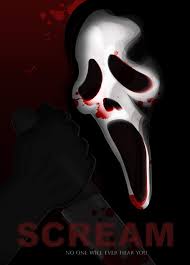
Within the sequence a long shot duration is used an example of this was when the girl was on the phone at the beginning of the sequence.when she was on the phone she was calm and relaxed however the longer the phone call was the more unrelaxed she became. This added tension to the film as she felt uneasy.
- Short shot durations were also used within the sequence this occured when her boyfriend was outside,tied onto a chair with the girl looking out to him. Short short durations is a type of shot duration.By looking between both characters it shows the audience a cut between the two characters.
- Cross cutting is used, this is a type of continuity. cross cutting was used when her parent car was driving towards the hosue,the camera switched between the car and the girl, each time the shot went back onto the car was a lot closer than before. By making the car reach the house quicker adds to the tension as you dont know if they will make it in time, also by making the car reach the house quicker reduces the chance of the audience getting bored of the scene.
- Cut is a type of transition. This was used throughout the whole sequence, it is used from inside the house to outside the house. By using cut transitions rather than fades and wipe transitions adds to the tension as the changes of scene are faster and more tense.
- Cutaway is a type of continuity, a cutaway occured in the popcorn scene.The focus switches between the woman and the popcorn as each time we see the popcorn it gets larger.By using popcorn as a prop it adds to the tension as we as the audience feel that it will pop, this relates to the girl and the 'scream' man as were waiting for him burst in. Because the popcorn doesnt pop it adds tension as we dont know when it will or when the man will occur.
- Eyeline match is a type of continuity, an eyeline match is used many times within the sequence for example when the scream man is over the girl just as she is about to die, there eyes meet when she takes his mask of. However to the audience the man is still not revealed. Another example is when her mother makes eye contact with her as she see's her daughter hanging from the tree. Eyeline match involves the audience as we see from the persons perspective what theyve just seen.
- Fade to black is a transition which is used at the end of the film.By using this shows that the scene has come to an end.
Editing techniques; SCREAM.
 Why were the particular editing techniques used in this sequence? What does it mean to the audience?
Transitions
Fade to black: This was used at the end of the movie. It is used to add a clear ending quickly.
Cut: This technique was used a lot of times throughout the movie. It is used to change the scene. It gives the film a fast, snappy, polished effect. Which helps the audience feel more involved in the movie and it gives an intense atmosphere.
Cutaway: This was used in the popcorn scene. It is used to add a brief interuption to convey a different but related scene.
Eyeline match: It is used when the parents are looking at the daughter hanging from the tree. It is used to show the viewers the characters point of view. Which adds intensity and draws the viewers in.
Crosscutting: It is used when the car is driving in the distance whilst the girl is at home. It shows what else is happening in the narrative without being boring.
Shot duration
Long shot duration: This was used when the girl was on the phone to the man. This shows a calm and relaxed mood. It also conveys detail.
Short shot duration: This technique was used when the boy was outside, girl in house and when she was looking at the boy. It is used to convey urgency and panic makeing it uncomfortable for the audience to watch.
Editing Techniques - Scream
Scream
Why were the particular editing techniques used in the sequenece? What does it mean to the audience?-Long shot duration is a type of shot duration which was used when the girl was on the phone at the beginning. This shows that it was relaxed and she was chilled as she was not worried about the man on the phone. This adds to the build up of the film.
-Short shot duration is also a type of shot duration which was used a lot in the second half of the clip, for example, when the boyfriend was outside the house tied to a chair, and when the girl was frantically running around her house. This shows the audience a sense of urgency as she is now scared, which adds tension to the audiences view.
-Jump cut is a type of transistion and many were used throughout the clip, for example when the girl was looking out of the window, and it then jump cuts onto her boyfriend in the garden. This shows the audience a cut between two people.
-Eyeline match is a type of continunity. This was used when the girl was staring out the window, and then we see she is looking at her boyfriend. Another example is when her mum is looking at her daughters body hanging on the tree. This builds tension for the audience as they are left wondering what the characters are looking at, especially as the audience can see the characters exagerated reaction to what they can see.
-Cross cutting is also a type of continunity, and an example of this in the clip is when the girls parents are driving down the long road. The camera goes from the car to the girl, and when it goes back to the car it is a lot closer than before. This saves the audience from becoming bored of watching just one scene, as the car would of taken at least 15 seconds to reach the house.
-Cutaway is another type of continunity. An example of this would be the popcorn scene. You see the popcorn being put on the hob, and then the shot moves onto the woman, and when it focuses back onto the popcorn, it has become bigger. This happens when a continuous action is interrupted by another related shot. This makes it less boring for the audience.
-Fade to black is a type of transition which happens at the end of the clip. This shows the audience quickly that scene is now over.

Tuesday, 4 October 2011
Mise-en-Scene- Hogfather Clip Analysis
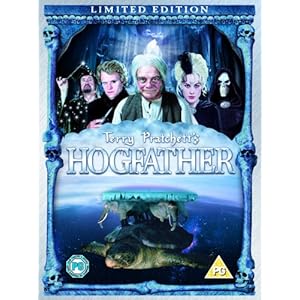
The Hogfather clip, Mise-en-scene analysis:
Setting:
Where/when is it set?
The first scene was set in a tooth fairy building, and by looking at the bright white walls, we could see teeth on the wall. The other scene was set in an old fashioned house.
Is it filmed on set or location?
It is filmed on a set as the building isn't real, we can tell this because the house has teeth everywhere and this of course is not your avaerage house!
What does this tell us anything about the genre?
The genre of Hogfather is probably a fantasy as it is about toothfairies.
Props
What props have been included?
The prop that stood out the most was a grandfather's clock.
Do they tell you anything about the setting or genre?
The clock shows that the genre could be fantasy (as the character stops by one click of her fingers which obviously isn't real) or a horror/thriller as grandfather clocks are often seen to be scary and intimidating
Lighting
Natural or artificial lighting?
Natural or artificial lighting?
Throughout the clip that what we watched, Hogfather was filmed inside, which means they used artificial lighting. This is especially prominant in the first scene that we see in the toothfairy house: the rooms are so bright that it is highly unlikely that they used ambient lighting.
Intensity?
The first scene had very bright intense light, however the following scene with the female character was very dark and the whole room had a shadow affect making the atmosphere very gloomy.
Casting
It is difficult to know why the female actress was picked for the Hogfather but the male character choice could have been made for his stern look. As the clip was only 3 minutes long we weren't sure of the narrative, but the reaction of another character when he comes face to face with the lead he is very scared. So we presume that he is a dominant, patronising character and I think the actor was chosen for this because of his posture (very up right as if he has authority) and his very sharp facial features that can be quite scary.
It is difficult to know why the female actress was picked for the Hogfather but the male character choice could have been made for his stern look. As the clip was only 3 minutes long we weren't sure of the narrative, but the reaction of another character when he comes face to face with the lead he is very scared. So we presume that he is a dominant, patronising character and I think the actor was chosen for this because of his posture (very up right as if he has authority) and his very sharp facial features that can be quite scary.
Costume and Make-up
What are the characters wearing?
What are the characters wearing?
The female character is wearing what looks like old fashioned clothing which tells us that the Hogfather was prehaps set in the 'olden days'. The main male character wears a straight coat with squared shoulder bads making him look domineering and even evil. The coat is black, also helping to represent evil or negativity. In regards to makeup we saw that the older man was wearing prosthetic ears which conveys the Hogfathers theme of fantasy.
Mise-en-scene and meaning: the hogfather
The Hogfather-
setting: where/when is it set?is it filmed on a set or a location?does the setting tell us anything about the genre?It is set in a misfitting place, it is filmed on a set and also in a location.It is set in olden days as the buildings are completly different to how they are in this generation, the decor within the house looks quite old fashioned.How the programme is set it gives the impression it is a fantasy programme.
Props:what props have been included?do they tell you anything about the setting or genre? connative meaning?within the scene we see many different props for example: when the mans hat falls off and when he drops his stick on the floor,he dropped his stick as a reaction because he jumped. Also another example would be when the elf is rolling up a cigarette, this however didnt link with the scene.The fact the man has big ears connates his elf looking character.
lighting:natural or artifical lighting? wheres it coming from? intensirty?shadow?what atmosphere was created?
Within the scene dark lighting was used alot by using dark lighting gives the impression that the atmosphere is dark and evil.However in the beginnning scene the ligthing is very bright, but the main character however was dressed in black which also links to the evil atmosphere. Ambient lighting was also used when the candle was the only light within the bed room.Side lighting was used when the woman kissed goodnight to the children, by using side lighting created shadows of the woman's face onto the children, it almost eliminated the childrens face as the shadows were strong.
casting:who is playing each role?is there any significance to these choices?
There are three domiant characters which consists of the skeleton santa, the elf and the woman. the Santa dominates the elf and the woman dominates her children. the children were passive characters as they were only seen once throught the scene.There are also other passive characters such as the young man at the beginnning of the scene,the blonde man was also a passive character he still had a dominant role as he dominated the young man.
costumes& makeup: what are the characters wearing?does his tell us anything about the character?relationships between them and the setting? is one colour more prevalent than others? what effect does this have?within the scene we see each character in deep coloured clothing for example the blonde man wearing a black cape, by wearing dark colours adds to the sense of evil. The woman wore old fashioned clothing throught the scene.
setting: where/when is it set?is it filmed on a set or a location?does the setting tell us anything about the genre?It is set in a misfitting place, it is filmed on a set and also in a location.It is set in olden days as the buildings are completly different to how they are in this generation, the decor within the house looks quite old fashioned.How the programme is set it gives the impression it is a fantasy programme.
Props:what props have been included?do they tell you anything about the setting or genre? connative meaning?within the scene we see many different props for example: when the mans hat falls off and when he drops his stick on the floor,he dropped his stick as a reaction because he jumped. Also another example would be when the elf is rolling up a cigarette, this however didnt link with the scene.The fact the man has big ears connates his elf looking character.
lighting:natural or artifical lighting? wheres it coming from? intensirty?shadow?what atmosphere was created?
Within the scene dark lighting was used alot by using dark lighting gives the impression that the atmosphere is dark and evil.However in the beginnning scene the ligthing is very bright, but the main character however was dressed in black which also links to the evil atmosphere. Ambient lighting was also used when the candle was the only light within the bed room.Side lighting was used when the woman kissed goodnight to the children, by using side lighting created shadows of the woman's face onto the children, it almost eliminated the childrens face as the shadows were strong.
casting:who is playing each role?is there any significance to these choices?
There are three domiant characters which consists of the skeleton santa, the elf and the woman. the Santa dominates the elf and the woman dominates her children. the children were passive characters as they were only seen once throught the scene.There are also other passive characters such as the young man at the beginnning of the scene,the blonde man was also a passive character he still had a dominant role as he dominated the young man.
costumes& makeup: what are the characters wearing?does his tell us anything about the character?relationships between them and the setting? is one colour more prevalent than others? what effect does this have?within the scene we see each character in deep coloured clothing for example the blonde man wearing a black cape, by wearing dark colours adds to the sense of evil. The woman wore old fashioned clothing throught the scene.
mise-en-scene meaning
Hogfarther
Setting
Where/When was it set?
What set or location?
Does the setting tell us about the genre?
The Hogfather started off, set in a building full of white rooms which contained lots of teeth. The scenes which followed were set in a a house and the rooms within the house. With the look of the house and the design this tells us the genre is fantasy and not real.
Props
What props are used?
Do they tell us anything about the setting or genre?
Some of the props included in the Hogfather were Clocks, Pictures, Lamps. cigarettes paper. these props make it feel more natural
Setting
Where/When was it set?
What set or location?
Does the setting tell us about the genre?
The Hogfather started off, set in a building full of white rooms which contained lots of teeth. The scenes which followed were set in a a house and the rooms within the house. With the look of the house and the design this tells us the genre is fantasy and not real.
Props
What props are used?
Do they tell us anything about the setting or genre?
Some of the props included in the Hogfather were Clocks, Pictures, Lamps. cigarettes paper. these props make it feel more natural
Hogfather (mise-en-scene)
Setting: When the man is falling out of the castle he is on location but the rest of the scene is filmed on set.
Props: Even though the man with the spar looked like he had control over the situation as soon as the larger character came in he throw the spar losing control of the scene. Through the whole scene the man is rolling up a cigarette but as soon as 'Santa' goes up the chimney the cigarette blows away.
Costume: The man who was the elf is wearing the stereotypyical elf costume of the pointed ears and the green outfit. The man who was walking at the beginning of the scene was wearing all black which maybe shows power and dominant to the other characters.
Lighting: Ambient lighting was used in most of the scenes except when on the 'Santa' character artifical lighting was used to show his split personality. In the scene with the 'Santa' and the 'Elf' the background lighting was kept dark and gloomy so that you could only see the characters faces and their expressions.
Casting: Using a short actor is stereotypical to play the elf because the audience automatically thinks of an elf to be small and have quite a high pitched voice.
Movement: The large character was moving in an intimindating and fast paced way with his arms by his side this again shows his power over other characters. The man in the corner was scared of the larger character as soon as he walks into the room. The mother character came into the room like she wasn't supposed to be there, did what she wanted to do and left quickly.
Framing: When the larger character was walking up the staircase you see all the background behind him of the large white bricks and strong lighting which helps you to understand where he is.

Props: Even though the man with the spar looked like he had control over the situation as soon as the larger character came in he throw the spar losing control of the scene. Through the whole scene the man is rolling up a cigarette but as soon as 'Santa' goes up the chimney the cigarette blows away.
Costume: The man who was the elf is wearing the stereotypyical elf costume of the pointed ears and the green outfit. The man who was walking at the beginning of the scene was wearing all black which maybe shows power and dominant to the other characters.
Lighting: Ambient lighting was used in most of the scenes except when on the 'Santa' character artifical lighting was used to show his split personality. In the scene with the 'Santa' and the 'Elf' the background lighting was kept dark and gloomy so that you could only see the characters faces and their expressions.
Casting: Using a short actor is stereotypical to play the elf because the audience automatically thinks of an elf to be small and have quite a high pitched voice.
Movement: The large character was moving in an intimindating and fast paced way with his arms by his side this again shows his power over other characters. The man in the corner was scared of the larger character as soon as he walks into the room. The mother character came into the room like she wasn't supposed to be there, did what she wanted to do and left quickly.
Framing: When the larger character was walking up the staircase you see all the background behind him of the large white bricks and strong lighting which helps you to understand where he is.
Monday, 3 October 2011
mise-en-scene analysis: Sex and the city 2
1. what does the mise-en-scene tell us about the possible theme(costume)?
Within the trailer we see that the characters are well off as they constantly wear designer clothing, we also see that Carrie and Samantha are the most extravagent out of the four as they wear bigger and more eye catching clothing.How the women dress shows their high class/social status.
2.what does the mise-en-scene tell us about the individual characters?
Within the trailer we see that Samantha and Carrie are the most extravagent with their clothing compared to Charlotte and Miranda, this may be because Charlotte and Miranda have had children. Charlotte and Miranda wear more discrete clothing and expose less skin compared to Samantha and Carrie.For example Samantha wears a cut out swimming costume to the pool,which is quite revealing and also frowned up in Abu Dhabi to show that much skin.Whereas Miranda wears a Khaftan which covers up the main parts of her body. This shows Samantha is more rule breaker and more out going compared to Miranda, we can tell this throughout the trailer due to their clothing.Another example is when Carrie goes out for dinner she wears a long dress with a long slit to the top of her leg this is quite revealing compared to Charlottes more discrete dress which shows little skin, within the film we can see the Charlotte and Miranda are the mums within the group due to their outfits.

Within the trailer we see that the characters are well off as they constantly wear designer clothing, we also see that Carrie and Samantha are the most extravagent out of the four as they wear bigger and more eye catching clothing.How the women dress shows their high class/social status.
2.what does the mise-en-scene tell us about the individual characters?
Within the trailer we see that Samantha and Carrie are the most extravagent with their clothing compared to Charlotte and Miranda, this may be because Charlotte and Miranda have had children. Charlotte and Miranda wear more discrete clothing and expose less skin compared to Samantha and Carrie.For example Samantha wears a cut out swimming costume to the pool,which is quite revealing and also frowned up in Abu Dhabi to show that much skin.Whereas Miranda wears a Khaftan which covers up the main parts of her body. This shows Samantha is more rule breaker and more out going compared to Miranda, we can tell this throughout the trailer due to their clothing.Another example is when Carrie goes out for dinner she wears a long dress with a long slit to the top of her leg this is quite revealing compared to Charlottes more discrete dress which shows little skin, within the film we can see the Charlotte and Miranda are the mums within the group due to their outfits.
Mise-en-scene Analysis
Sex and the City trailer
Costume
What does the mise-en-scene tell us about the possible theme (costume)?
Throughout the trailer all of the characters are dressed in big, bold and glamourous outfits that look expensive. This shows the audience that there are four main characters in the film that seem to have a lot of money to be able to afford these outfits, and this also shows their social status.
What does the mise-en-scene tell us about the individual characters?
By watching the trailer it shows us that all four main characters have a lot of money. Their lifestyle comes across as very busy and high class. Charlotte and Miranda both have families, whereas Carrie is married, and Samantha is single and quite a sexual character as we see in the clip. Also a couple of the scenes in the trailer show us that they like to take care of their appearance as they stay looking young and fit. In the trailer we see Carrie open up her walk in wardrobe with lots of dresses and shoes in, showing us that she is wealthy. She is also wearing extravegant clothing to show she is very fashionable.
Costume
What does the mise-en-scene tell us about the possible theme (costume)?
Throughout the trailer all of the characters are dressed in big, bold and glamourous outfits that look expensive. This shows the audience that there are four main characters in the film that seem to have a lot of money to be able to afford these outfits, and this also shows their social status.
What does the mise-en-scene tell us about the individual characters?
By watching the trailer it shows us that all four main characters have a lot of money. Their lifestyle comes across as very busy and high class. Charlotte and Miranda both have families, whereas Carrie is married, and Samantha is single and quite a sexual character as we see in the clip. Also a couple of the scenes in the trailer show us that they like to take care of their appearance as they stay looking young and fit. In the trailer we see Carrie open up her walk in wardrobe with lots of dresses and shoes in, showing us that she is wealthy. She is also wearing extravegant clothing to show she is very fashionable.
SEX AND THE CITY 2: MISE-EN-SCENE ANALYSIS!!!
WHAT DOES THE MISE-EN-SCENE TELL US ABOUT THE POSSIBLE THEME?
COSTUME: All the characters wear very girly but elegant clothes that stand out. These draws our attention to nothing but them instead of being distracted by the background. For example: When they are all in the desert, the ambient background helps us focus on the charcaters outfits rather then the setting around them. Also the mise-en-scene tells us diffeerent information about each character, for example, Sarah Jessica Parker is normally scene in sparkly dresses, telling us she is a bit of a girly girl and is very tidy about her appearence.
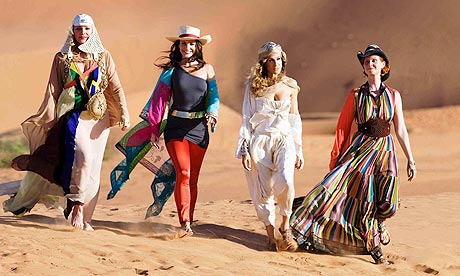
COSTUME: All the characters wear very girly but elegant clothes that stand out. These draws our attention to nothing but them instead of being distracted by the background. For example: When they are all in the desert, the ambient background helps us focus on the charcaters outfits rather then the setting around them. Also the mise-en-scene tells us diffeerent information about each character, for example, Sarah Jessica Parker is normally scene in sparkly dresses, telling us she is a bit of a girly girl and is very tidy about her appearence.
WHAT DOES THE MISE-EN-SCENE TELL US ABOUT THE INDIVIDUAL CHARACTERS?
It tells us about their different personalities and what role they play in their social class. It can also give us some idea of what status they stand in. The costume design for all of them tends to be very glamerous and bright, when put against dull colour costumes they stand out more showing that out of everyone in the production, they are the most important characters. Sarah Jessica Parker is mainly the centre character of the show, you can this by what she wears. Most of the time it tends to be different what everyone else wears. Through this we can tell that she is what the show is revolved around.
mise-en-scene Analysis
What does the mise-en-scene tell us about the possible theme?
- The cosutumes are very glamerous and dressed up, e.g- heels,dresses daily instead of just going out once. Shows us that the woman in this film take pride in appearance and are dressed to impress.
What does the mise-en-scene tell us about the individual characters?
- The woman characters are all simular in the sense that they all wear dressy clothes, but 2/4 of the woman have children who dont always look as glamerous and probs afford the nicer clothes as they 2 woman married without children, who focus more on their appearance. They dont maybe look as stressed as the others.
- The cosutumes are very glamerous and dressed up, e.g- heels,dresses daily instead of just going out once. Shows us that the woman in this film take pride in appearance and are dressed to impress.
What does the mise-en-scene tell us about the individual characters?
- The woman characters are all simular in the sense that they all wear dressy clothes, but 2/4 of the woman have children who dont always look as glamerous and probs afford the nicer clothes as they 2 woman married without children, who focus more on their appearance. They dont maybe look as stressed as the others.
TV Drama: Mise-En-Scene!
Lighting in Sex and The City 2 trailer:
What does the mise-en-scene tell us about the possible theme?
We realised that whenever the main male characters are on screen, the lighting is always low key. This could represent that this movie is dominanted by women as they are always in high key lighting. Also we saw that in the possible intimate scenes, for example when Carrie and her Fiance were in the hotel room laying in bed, the lighting was artificial and very low key which tells us it is very intimate and special so this could tell us there is some love scenes in this movie.
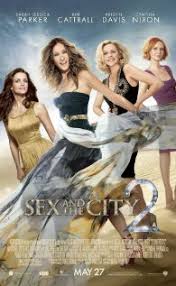
What does the mise-en-scene tell us about the individual characters?
Like mentioned aboove the film seems very dominant by female, this could tell us that the female characters are very strong and indpendent. The main characters seem to always be in high key, mostly ambient lighting. This again shows there independance but could also be to show to contrast between the men and women in this film.
What does the mise-en-scene tell us about the possible theme?
We realised that whenever the main male characters are on screen, the lighting is always low key. This could represent that this movie is dominanted by women as they are always in high key lighting. Also we saw that in the possible intimate scenes, for example when Carrie and her Fiance were in the hotel room laying in bed, the lighting was artificial and very low key which tells us it is very intimate and special so this could tell us there is some love scenes in this movie.
What does the mise-en-scene tell us about the individual characters?
Like mentioned aboove the film seems very dominant by female, this could tell us that the female characters are very strong and indpendent. The main characters seem to always be in high key, mostly ambient lighting. This again shows there independance but could also be to show to contrast between the men and women in this film.
Sex and the City Analysis mise-en-scene
What does the mise-en-scene tell us about the possible theme?
 Costume: The outfits the characters wear are very outrageous and unique. This shows us the possible theme is very girlie and it also draws attention to the characters high status. This mise-en-scene conveys different information about each individual character. For example, the housewife, Charlotte York is represented as a stereotypical woman as she is wearing an apron whilst cooking for her children. Their costumes are very elegant and femine displaying a traditional woman.
Casualty camerawork and meaning
Write down all the camera techniques of which you recognise in the extract, remember shot, angle, movement, position.
close up
medium shot
extreme close up
pan
reaction shot
tilt
ariel shot
long shot
two shot
over head shot
over shoulder shot
birds eye view shot
Tracking
Crane
point of view (POV)
Handheld
Choose three out of your list and produce a brief analysis by using the TEA formula.
There was a handheld movement in the extract when a man falls down a flight of stairs. I think that this type of movement was used to give a realistic effect and made the audience nervous and anxious.
There was also a two shot technique used when the two men were having a conversation in the cafe, this tells us that the men were have a relationship and it makes the audience feel they are listening into the conversation.
Over the Shoulder Shot was used alot, it was used when the two characters were in the clothes shop. This made the audience feel like they were looking over the shoulder of this character and seeing what he was seeing.
Choose three out of your list and produce a brief analysis by using the TEA formula.
There was a handheld movement in the extract when a man falls down a flight of stairs. I think that this type of movement was used to give a realistic effect and made the audience nervous and anxious.
There was also a two shot technique used when the two men were having a conversation in the cafe, this tells us that the men were have a relationship and it makes the audience feel they are listening into the conversation.
Over the Shoulder Shot was used alot, it was used when the two characters were in the clothes shop. This made the audience feel like they were looking over the shoulder of this character and seeing what he was seeing.
Camera work and Meaning
Casualty extract
Camera techniques
-Close up
-Long shot
-Tracking
-Medium shot
-Selective focus
-Handheld
-High angle
-Tilt
-Low angle
-Two shot
In the extract there was an example of a two shot when they were in the cafe. This shows they were engaged in conversation just between the two of them.
In the extract there was many close up shots, but one in particular was in the back of an ambulance when the woman is talking to the man who is bleeding, she seems angry and alert and this shows urgency.
When the man was laying on the floor after he collapsed, there was an example of a high angle shot. This type of shot was used to show that the character is vulnerable, and also makes the accident seem even more dramatic.
Camera techniques
-Close up
-Long shot
-Tracking
-Medium shot
-Selective focus
-Handheld
-High angle
-Tilt
-Low angle
-Two shot
In the extract there was an example of a two shot when they were in the cafe. This shows they were engaged in conversation just between the two of them.
In the extract there was many close up shots, but one in particular was in the back of an ambulance when the woman is talking to the man who is bleeding, she seems angry and alert and this shows urgency.
When the man was laying on the floor after he collapsed, there was an example of a high angle shot. This type of shot was used to show that the character is vulnerable, and also makes the accident seem even more dramatic.
Subscribe to:
Comments (Atom)